


Immune Network Research Unit
Elucidating How Symbiotic Microbes Affect Hosts and the Underlying Mechanisms
Specialty:Innate Immunology Gut Microbiology Neuroscience
Keyword:Germ-Free Animals Innate Immunity Gut Microbiota Lifespan Metabolism Instinctive Behavior


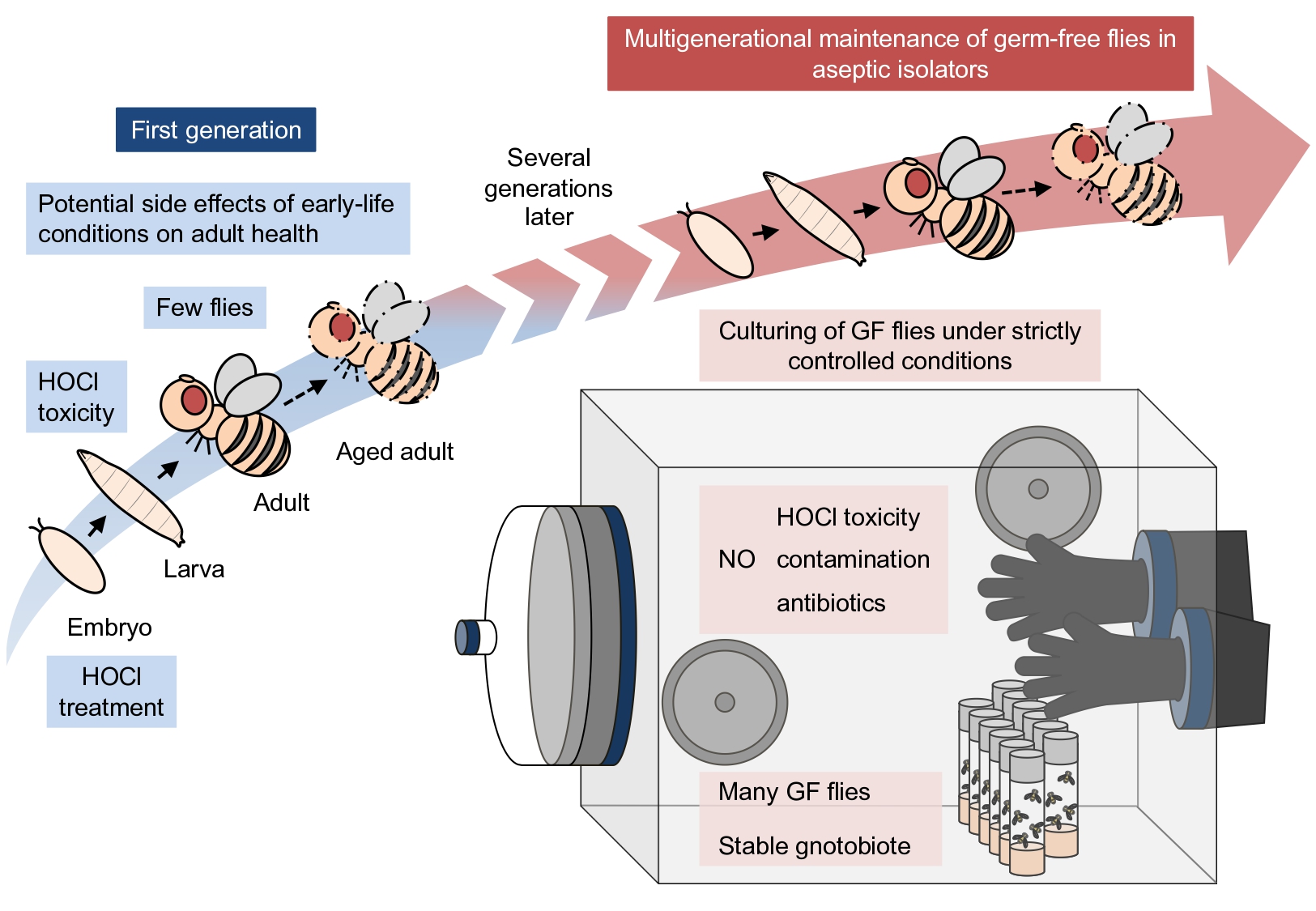
During evolution, the intestinal tract was among the earliest organs to emerge in multicellular organisms. Its central role in digesting and absorbing nutrients creates an ideal habitat for commensal microbes, whose impact on their hosts is profound. Indeed, gut bacteria help regulate a broad range of physiological functions—from intestinal immunity and liver function to adipose tissue balance and even brain development and behavior. Despite these wide-ranging influences, the molecular mechanisms by which gut microbes exert their effects remain poorly understood. Bacteria produce a variety of small-molecule metabolites, which differ across species, leading us to hypothesize that these compounds may be recognized by host receptors such as G protein-coupled receptors in the gut. To test this hypothesis, we need to compare germ-free flies, completely devoid of microbiota, with conventionally reared flies. Our laboratory is the first to develop a method for producing and maintaining genuinely germ-free Drosophila for many generations, using a vinyl isolator and specialized fly food. With this system, we aim to elucidate the molecular mechanisms underlying host–microbe interactions that are evolutionarily conserved across metazoans.

